Since June 2026, I have been head of the Machine Vision division at wenglor and in this role I am responsible for the product portfolio and development activities of the business unit. Even though I haven’t been with the company for long, industrial image processing is anything but foreign to me: I have been intensively involved with machine vision for 18 years and have gotten to know the market from different perspectives.
Twelve of those years I worked for a leading manufacturer of image processing software, and another six years for an international distributor of image processing technology. This allowed me to learn about a wide variety of areas – from algorithms and software to cameras and lighting to 3D technologies and complete image processing systems.
What fascinates me about machine vision to this day is the direct connection between technological development and industrial practice. Machine vision gives machines the ability to capture their environment, derive information from it, and make automated decisions. And it is precisely these skills that are currently developing rapidly.
Thinking about machine vision as an overall system
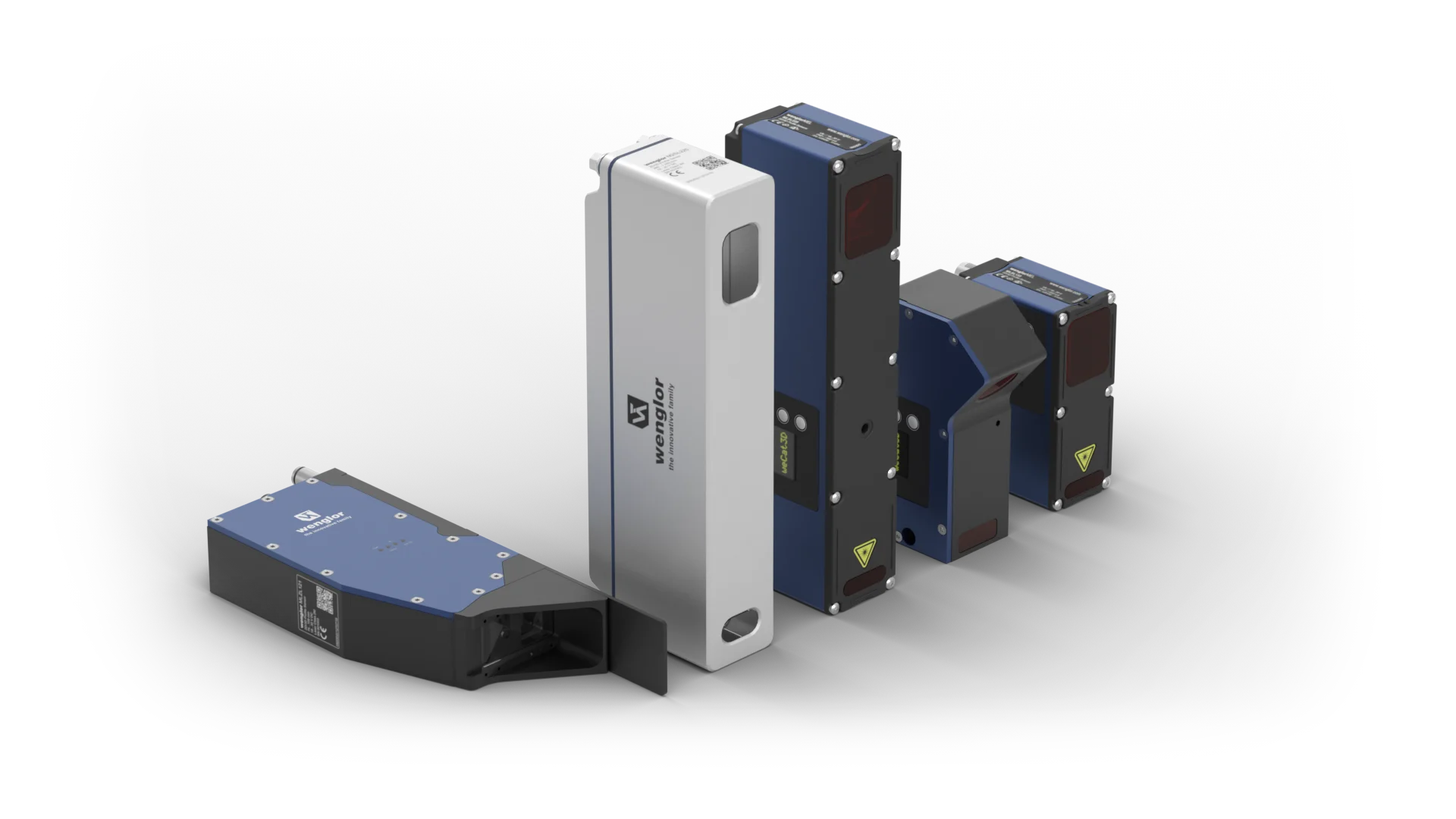
One aspect that struck me at wenglor from the beginning is the breadth of the machine vision portfolio. It ranges from AI-based software to smart cameras, industrial cameras and code readers to machine vision controllers, high-precision 2D/3D profile sensors, 3D sensors with structured light and industrial lighting systems.
However, the number of technologies is not the only decisive factor for me. Much more important is the question of how these can be combined to create reliable and scalable solutions.
After all, a successful machine vision application rarely depends on a single component. Image acquisition, lighting, algorithms, computing power, interfaces and application knowledge must interact. wenglor therefore pursues a holistic approach in which software, sensor technology and hardware are coordinated with each other. The uniVision software plays a central role in this. It provides tools for various image processing tasks and enables, among other things, rule-based image processing, AI applications, code reading, OCR and profile analysis on different hardware platforms.
AI: The path to production is crucial
Artificial intelligence is currently one of the most important technological developments in industrial image processing. It becomes particularly interesting where classic rule-based methods reach their limits – for example, in the case of natural variations, complex surfaces, changing appearances or error patterns that are difficult to define by fixed features. However, a trained model alone does not solve an industrial test task.
The crucial question is: How does AI reliably get from the development environment to production?
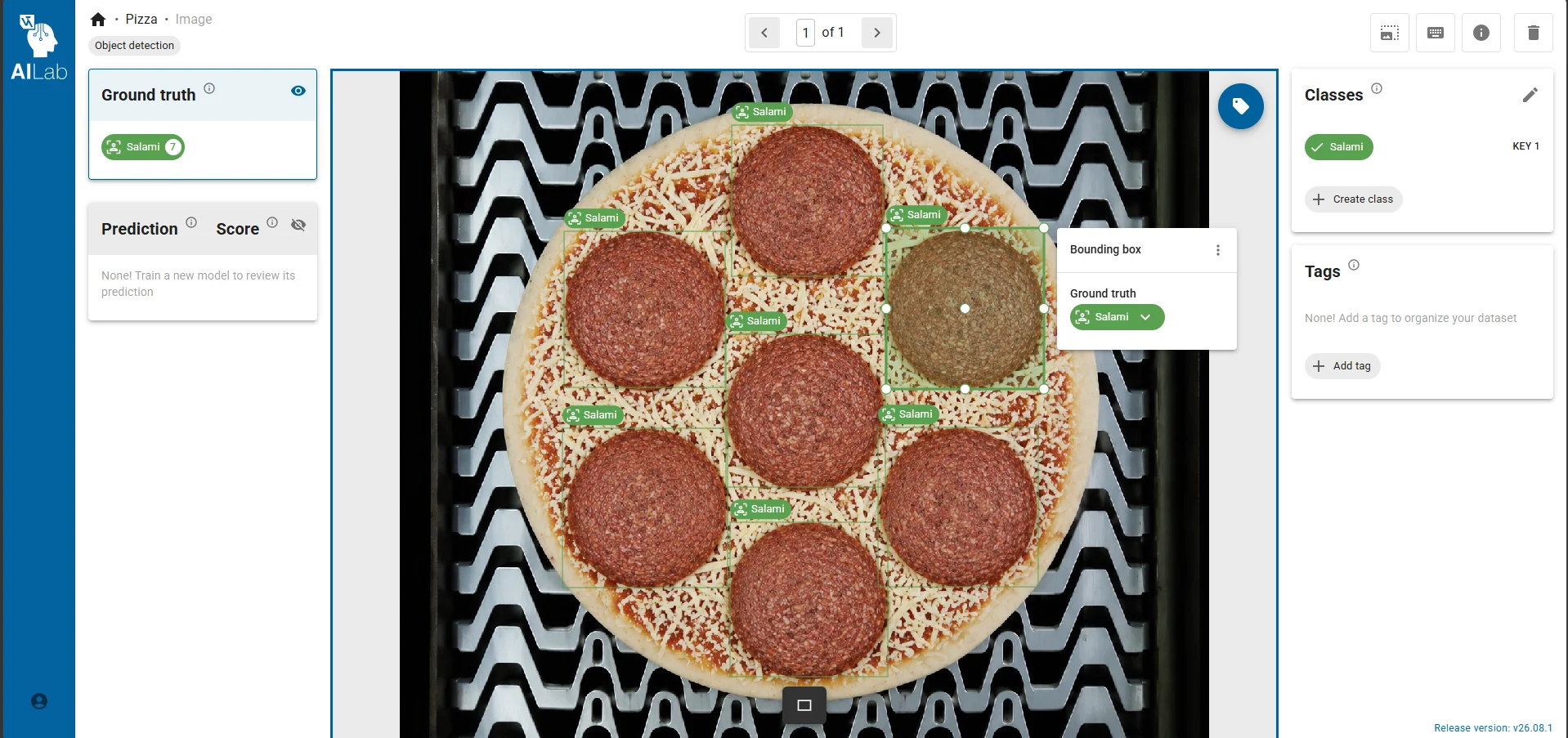
This is where wenglor’s AI Loop comes in. One component is the AI Lab, which provides tools for data annotation and model training. AI applications can thus be developed and further optimized within the wenglor ecosystem.
At the same time, it is possible to use existing neural networks in the ONNX format. Such models can be run on industrial hardware such as a smart camera or machine vision controller.
For me, this is an important development in the coming years: AI must be open enough for different development paths and at the same time suitable for industrial use. Cloud-based tools can support training and development, while the actual inference takes place close to the production process on edge hardware.
3D sensor technology provides machines with spatial information
Parallel to AI, the precise capture of three-dimensional information is becoming increasingly important. This applies in particular to robotics, measurement technology and automated quality inspection.
If a robot is not only to recognize components, but also to precisely record their position and geometry, classic 2D information is often not sufficient. The same applies to applications where height profiles, surfaces or dimensions need to be inspected.
wenglor’s 2D/3D displacement sensors use the principle of laser triangulation to capture precise elevation profiles. The movement of the object or sensor can create three-dimensional information. The entire sensor chain is crucial for data quality – from laser and optics to calibration and signal processing.
The possible applications range from profile and surface inspections to high-precision measuring tasks and robot guidance. Welding automation is a particularly challenging area of application: Here, sensors must provide precise information for finding and tracking a weld seam, even under difficult industrial conditions.
In addition, 3D sensors with structured light enable the extensive detection of complex geometries. Typical applications are dimensional and completeness checks as well as pick-and-place and bin picking processes.
Five Developments That Will Shape Machine Vision
From my experience so far, I see five developments that are particularly relevant for the next few years:
AI and rule-based image processing are growing together
It’s not about completely replacing classical algorithms with AI. High-performance applications combine both approaches and apply them where their respective strengths lie.
Edge computing brings computing power closer to the process
Development and training can be partially cloud-based, while evaluation takes place directly on industrial hardware. This enables short distances and direct integration into production.
3D Machine Vision Becomes More Important for Flexible Automation
Robotics, metrology, and quality inspection increasingly require precise spatial data to automate complex and variable tasks.
Complex technologies must become easier to use
More powerful algorithms alone are not enough. It is crucial that users can transfer them into real applications without unnecessary programming and integration effort.
Identification and quality inspection move closer together
Code reading, OCR, inspection results and process data can increasingly be combined within an end-to-end machine vision process. This also increases the importance of traceability.
What’s next?
My first months at wenglor showed me above all the potential of combining in-house sensor development, industrial hardware and powerful software.
One focus for me will be on the further development of high-precision 3D sensor technology and a high-performance smart camera portfolio. Advances in sensor technology, optics and signal processing enable increasingly precise and robust data acquisition – and thus new applications in metrology, inspection and robotics.
At the same time, software is becoming even more of a connecting element of modern machine vision systems. A common platform that combines rules-based practices, AI, and data processing makes it easier for users to build, customize, and scale solutions across different hardware configurations.
It is precisely at this interface between software, sensor technology and application that I see enormous potential for the coming years.