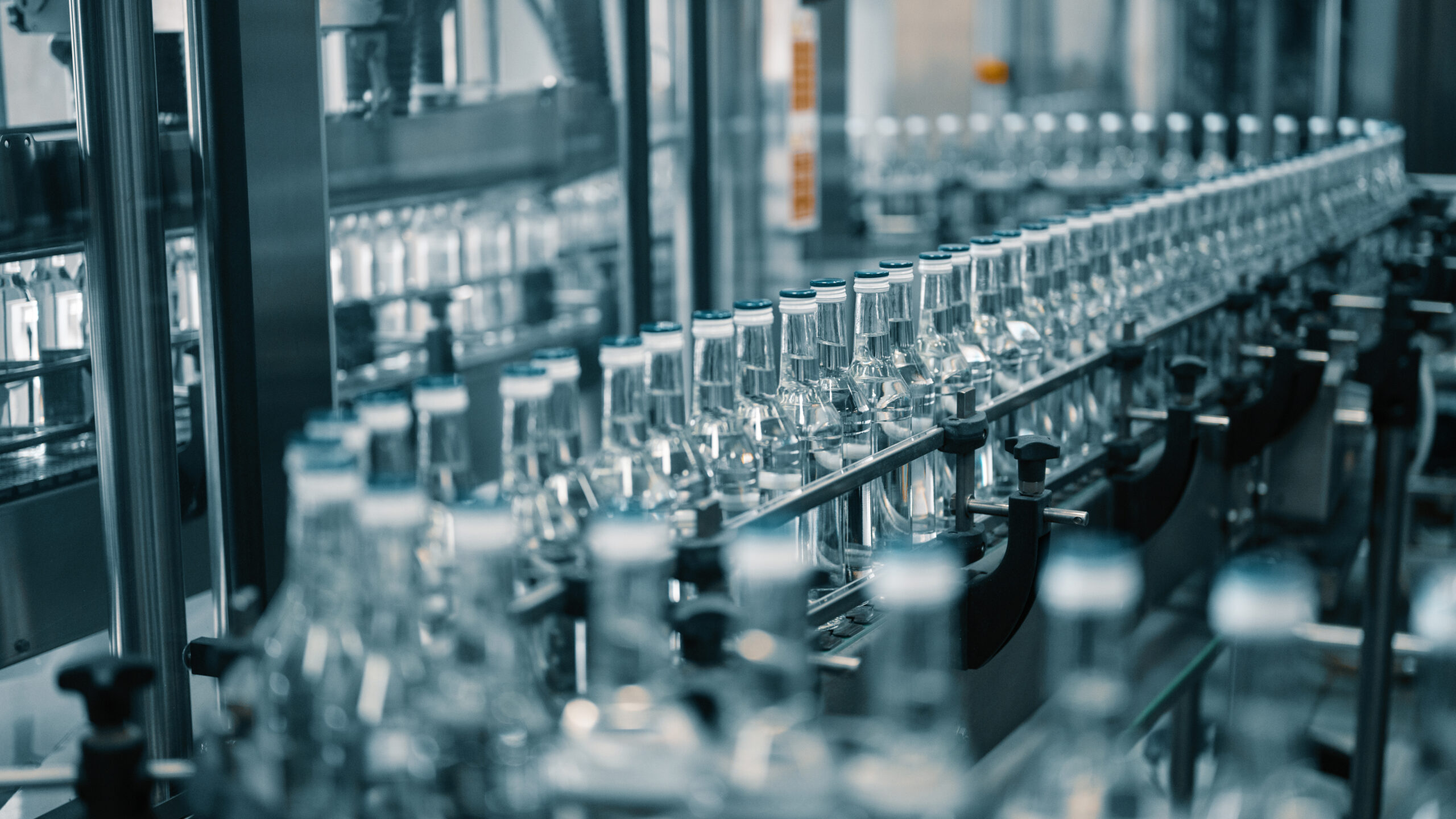
Checking the best-before date at the neck of the bottle is one of the central tasks of quality control in high-performance filling systems. At line speeds of around 15 bottles per second, the presence of the best-before date imprint must be reliably detected – regardless of the product, bottle colour or production speed.
Automatically check best-before date on the neck of the bottle
A specialized vision system was configured for the technical implementation of this demanding application:
- Control Unit BB1C: As a powerful central unit for data processing.
- Machine Vision Camera BBZK001: For high-frequency image capture.
- Lens ZVZG100: For precise optical detection of the bottleneck.
- Bar lighting (white light) LBAW101: For targeted light guidance.
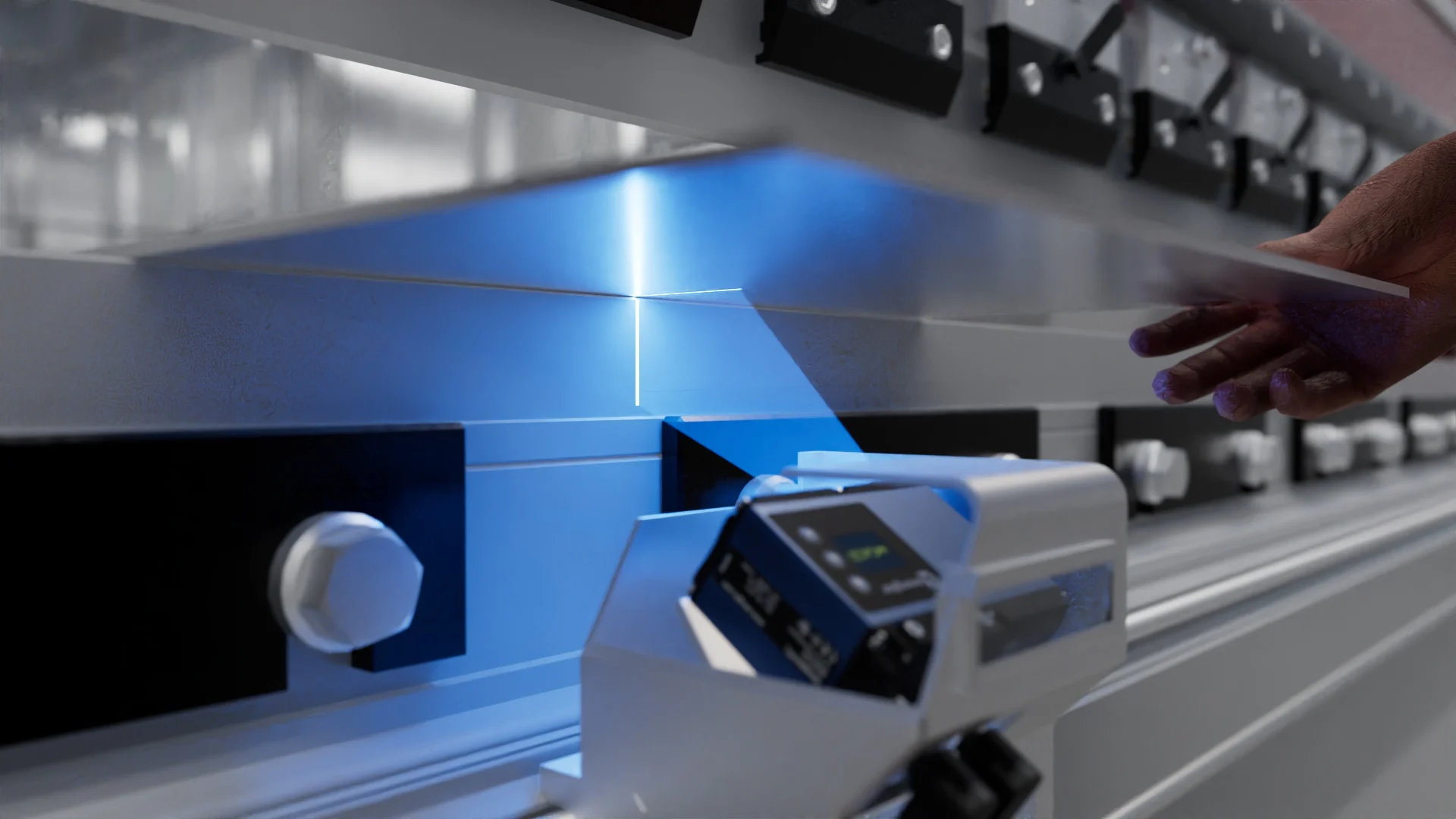
Lighting plays a decisive role here: targeted background or transmitted light illumination allows the date imprint to be clearly distinguished from the body of the bottle. This creates a stable contrast, especially for transparent or light-coloured products, which is essential for automated evaluation of the best-before date on the neck of the bottle.
Reliable recognition of best-before date imprints despite different contents
The application becomes more complex when bottles with differently colored liquids run over the same line. Dark fills absorb light more and significantly reduce the contrast between the date print and the background. In such borderline cases, simply adjusting camera or exposure settings is often not enough to guarantee a zero-error rate.
The sustainable solution was to adapt the process design: the date imprint was placed in the top area of the bottle neck. In this zone, the disturbing influence of the liquid paint is significantly lower, which makes it easier to control the lighting situation. The result is a stable test situation that can be used to check the best-before date on the neck of the bottle, regardless of the filling material.
Securely separate the best-before date from the background on the neck of the bottle
For software optimization, the threshold analysis was tested in uniVision 3. With precisely defined gray value limits, the date imprint could be reliably separated from the background – even with critical, dark liquids.
Background to the implementation: At that time, however, no available control unit supported uniVision 3, so that the solution could not be fully put into production at first. However, the test series clearly showed that robust high-speed control can be achieved through the combination of adapted print layout and optimized image processing software.
Reliably check best-before date on the neck of the bottle
Checking the best-before date on the neck of the bottle at approximately 15 bottles per second requires more than just high-performance hardware. The success of the application is based on the interaction of four decisive factors:
- Suitable lighting: creating maximum contrast.
- Optimal positioning of the imprint: Reduction of physical disturbances.
- Stable image processing: Fast algorithms for high clock speeds.
- Precise parameterization: Fine adjustment of the software to the product portfolio.
Anyone who considers process design, lighting and image processing as a complete system can reliably check the best-before date on the bottleneck – even with high cycle rates and different filling goods. This allows marking errors to be detected at an early stage and process reliability to be increased in the long term.
Are you planning a similar high-speed application?
I would be happy to support you in putting together the right setup of camera, lighting and software for your individual requirements. Would you like us to prepare a feasibility analysis for your system together?